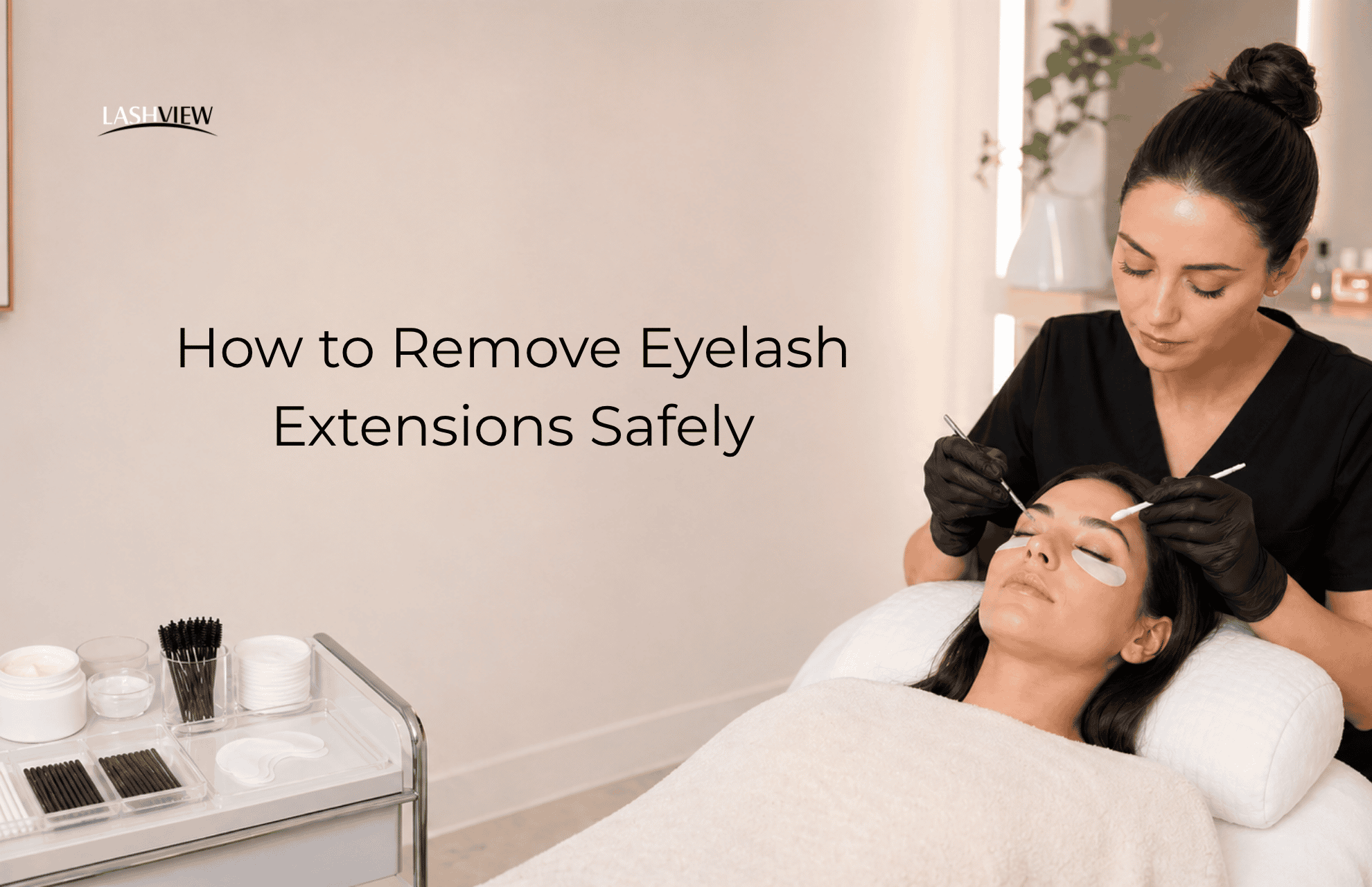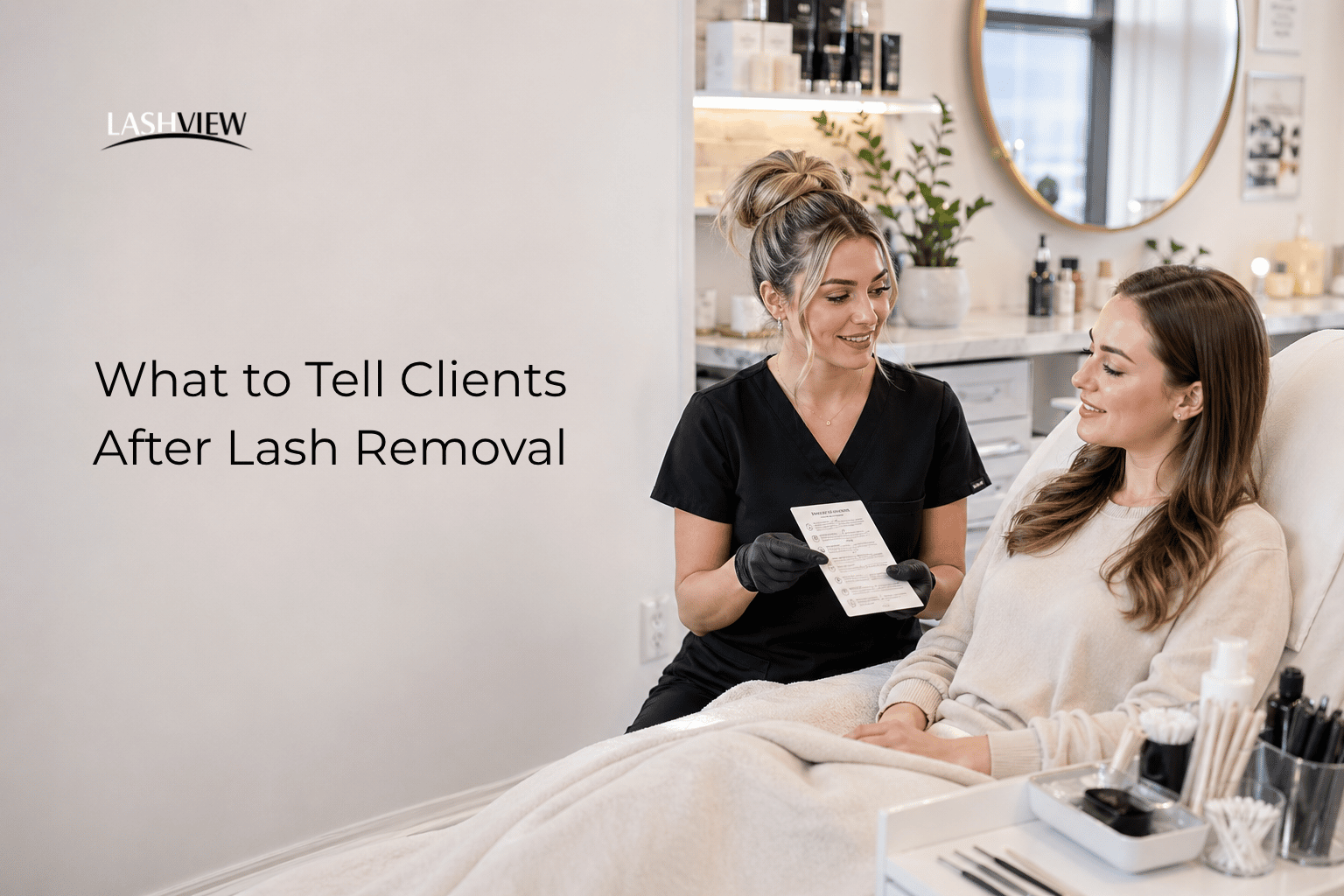

Lash removal is not the last step in the service workflow. Once the extensions are off, the next priority is assessing the natural lashes, clearing residue, rebuilding a clean working base, and deciding whether the client is ready for a fresh set that day. Good prep is what turns a removal appointment into a better next appointment. Professional lash prep guides consistently frame prep this way: as the process of bringing lashes back to a clean, workable surface before a new adhesive bond is introduced.
A lot of lash techs understand removal, but fewer treat post-removal prep as its own service stage. That is usually where the workflow starts to feel inconsistent. If the old set is gone but the base is not truly clean, the next service may still begin with hidden residue, oil, makeup, or leftover product on the lashes. Professional prep education repeatedly treats those things as real bonding variables rather than small cosmetic details.
Why Lash Prep Still Matters After Removal
A removal appointment should not end with product removal alone. It should end with a better assessment of what the natural lashes are ready for next. That means the lash artist is no longer asking, “Are the extensions off?” but instead, “Is the working base clean enough for the next decision?” That shift in mindset is what turns removal into a more professional workflow. The strongest pretreatment guides explicitly connect lash prep with better bonding and stronger retention, and they do so by focusing on cleanliness and surface condition rather than speed.
This is also where a professional setting still matters. California’s eyelash safety guidance tells consumers to look for a clean salon, clean and sanitized tools, a displayed license, and hand washing before service. That public guidance supports the same basic service tone here: prep should happen in a clean, controlled environment, not as an improvised add-on.
Step 1: Assess the Natural Lashes Before Reaching for More Products
The first step after removal is not adding more product. It is a reassessment. Before moving into prep, the lash artist should look closely at what is actually left on the lashes and around the lash line. The key question is not whether the lashes “look fine” at a glance. The key question is whether there may still be adhesive residue, remover residue, oil, makeup, or debris that will affect the next step. Professional pretreatment content repeatedly warns that oils, sebum, makeup residue, and product residue can interfere with a clean bonding surface.
This section should stay firmly in the language of service judgment. Do not write it like a medical assessment. Write it like a lash artist’s readiness check: reassess the lashes, identify what is still present, and decide whether the appointment can move into same-day prep or needs a more cautious next step. That keeps the tone aligned with public safety guidance, which centers licensed professional handling rather than home guessing or casual improvisation.
Step 2: Remove Residue and Rebuild a Clean Working Base
This is the most important section in the article. Prep after removal only works when the lash artist treats residue as a real service variable. Residue is not limited to visible dirt. Professional prep guides specifically mention oils, sebum, makeup, skincare residue, proteins, and leftover product as things that may stay on the lashes and interfere with adhesive performance later. London Lash’s pretreatment routine and related prep articles explicitly describe cleanser and prep steps as ways to remove oils, sebum, makeup, product residue, dust, and buildup from the natural lashes.
That is why “looks clean” is not the right standard. A lash line may look visually fine and still not provide the kind of clean working surface a new set needs. From a writing standpoint, this is where you should clearly teach the difference between cosmetic cleanliness and bonding readiness. Prep is about what the adhesive will meet next, not only what the eye area looks like in the mirror.
Read the Full Cream Remover Guide
Step 3: Cleanse the Lash Area Properly Before a Fresh Set
Once residue has been identified as part of the problem, cleansing becomes more than a routine gesture. It becomes a bonding step. The logic in professional prep education is consistent: lashes need to be clean, dry, and free from oils or makeup residue before the new adhesive is introduced. London Lash’s prep routine says this directly, and its cleanser-focused content explains that cleanser is meant to tackle oils, sebum, makeup, and product residue on the lashes.
A useful way to explain this in the article is to say: cleanse for bonding conditions, not just for appearance. The goal is not simply to make the lashes look fresh. The goal is to give the next service a cleaner, more predictable starting surface. That distinction is one of the most practical lessons you can teach in a post-removal prep article.
Step 4: Know When to Move Into Pretreatment
This is the bridge between the A series and your later retention content. Prep and pretreatment should be described as related, but not identical. In this article, prep is the stage where the lash artist restores the lashes to a clean, workable state after removal. Pretreatment is the more intentional stage that prepares a clean base for stronger bonding conditions before the new set is applied. Professional tutorial content supports this distinction in practice by presenting lash shampoo, protein-removing pads, cleanser, and primer as consecutive prep stages rather than one interchangeable step.
This is also where retention enters the conversation in a natural way. The same prep resources that discuss cleanser and primer also explicitly connect those steps with better adhesive performance and stronger lash retention. So when you transition from prep to pretreatment in this article, you are not changing the subject—you are simply moving deeper into the same workflow.
Read the Lash Pretreatment Routine Guide
Step 5: Decide Whether the Client Is Ready for a Fresh Set Today
Not every client should automatically move from removal into a fresh set on the same day. This article should frame that as a service-planning question, not as a dramatic or medical one. Some appointments will transition naturally into same-day fresh-set prep. Others may be better served by more cleanup, a more careful consultation, or a rebook. The professional point here is that the next step should follow service readiness, not speed or assumption.
California’s guidance supports this tone because it consistently centers on licensed professionals handling and proper service conditions. That makes “pause, reassess, and continue at the right appointment” a much better message than “always keep going if the extensions are already off.” This section should make the lash artist sound measured and credible, not rushed.
How Better Prep Supports Better Retention Later
This is the paragraph that should connect the whole article back to the bigger content system. Better prep supports better retention because a cleaner base gives adhesive a more reliable surface to work with. Professional prep resources repeatedly make this argument in different ways: clean, dry, oil-free lashes support stronger adhesion; oils, sebum, makeup residue, and leftover product make that harder. That is why prep is one of the easiest retention habits to standardize in a lash workflow.
This is also the most natural place to introduce your next content cluster. Once the reader understands that post-removal prep affects retention, the next questions become obvious: cleanser vs. primer, humidity and glue environment, and how to build a pretreatment routine that actually works consistently. In other words, this article should close the removal topic while opening the door to retention education. That last point is an editorial inference based on the structure of the prep sources, not a direct claim from any one source.
Explore More Pro Lash Prep Essentials on Amazon
FAQ
Should lash techs cleanse the lashes again after removal?
Professional prep guides strongly suggest that a clean, residue-free base matters before moving into the next service, so cleansing after removal is part of creating better prep conditions.
Can a client get a fresh set right after removal?
Sometimes yes, but the better answer is that it depends on service readiness, cleanliness of the lashes, and the lash artist’s professional judgment. That is a workflow decision, not an automatic rule.
Why does residue matter before a new set?
Because oils, sebum, makeup residue, and leftover product can interfere with the clean bonding surface that the adhesive needs. Professional prep content explicitly connects residue removal with better adhesion conditions.
What is the difference between prep and pretreatment?
Prep restores a clean workable base after removal, while pretreatment prepares that clean base for better bonding conditions before a new set. That distinction is an editorial framing built from how professional prep routines separate cleansing, residue removal, and primer steps.
Does a cleaner base help retention?
Yes. Professional lash prep sources repeatedly state that clean, dry, oil-free lashes support better adhesive performance and stronger retention.
When should a lash tech rebook instead of continuing the service?
When the cleaner, more professional choice is to pause and prepare for a better next appointment rather than push forward too quickly. This is best framed as service readiness and professional judgment.
Removal creates the opportunity for a better next service, but only if the prep is just as intentional as the removal itself. When lash techs clear residue, rebuild a clean base, and move into pretreatment with purpose, the next set starts cleaner, feels more controlled, and is easier to build well from the beginning. That is why prep after removal should not be treated as a minor detail. In professional lash education, it is one of the clearest bridges between removal and retention.