
Eyebrow tint has become one of those beauty treatments people search for when they want their brows to look fuller without drawing them in every morning. If your brows are light, sparse, uneven, or washed out by foundation and sunscreen, tinting can make them look more defined with less daily effort.
But eyebrow tint is also one of those topics where the internet gets messy fast. Some people talk about salon brow tint. Some mean hybrid dye. Some mean brow gel. Some are asking about at-home dye kits. Others are wondering whether beard dye can be used on eyebrows, which is a very different safety conversation.
So before choosing a product or booking a service, it helps to understand what eyebrow tint actually does, how long the result usually lasts, how shade matching works, and what U.S. shoppers should know about eye-area safety.
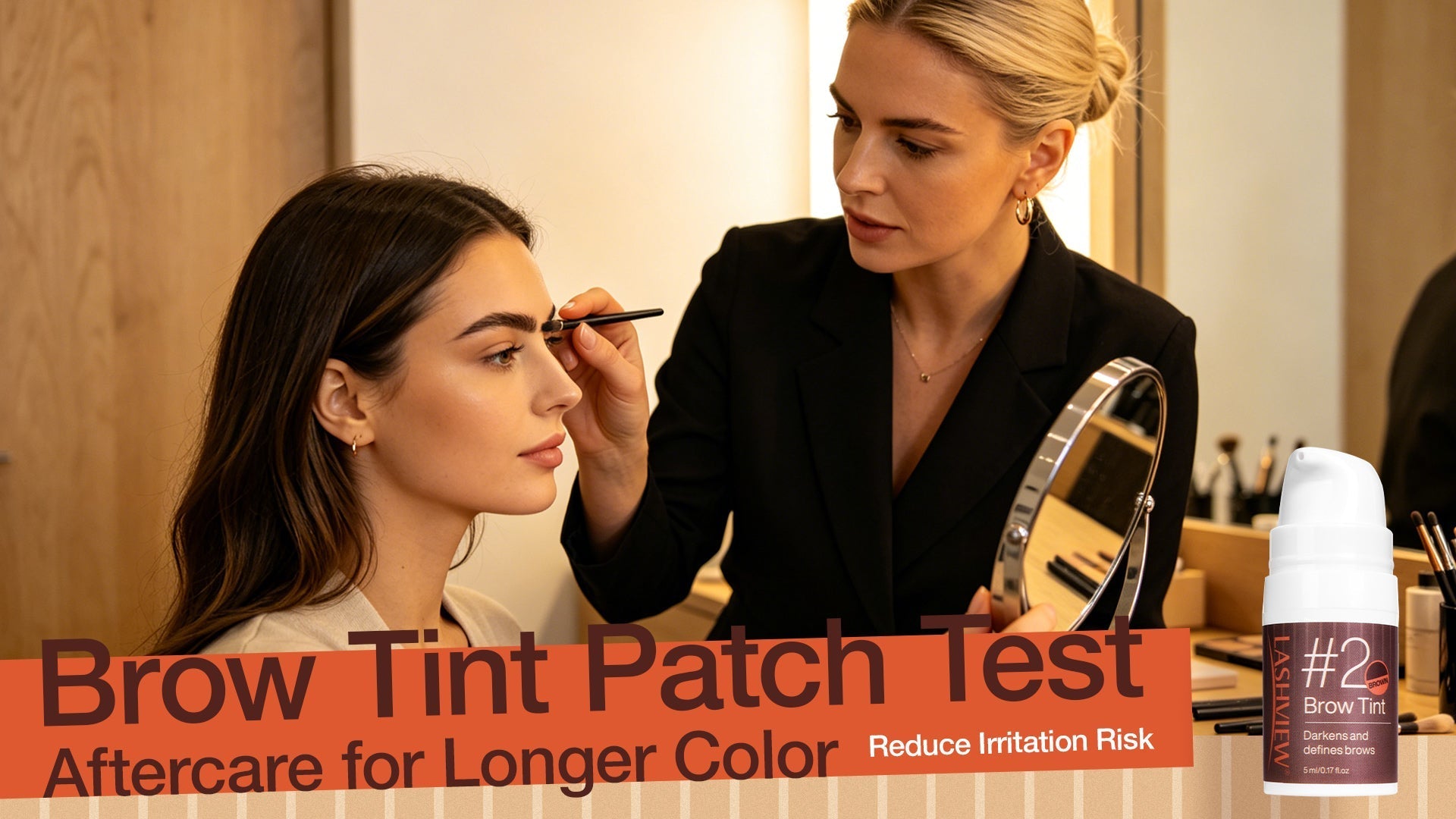
If your main concern is irritation or fading after tinting, you may want to save our follow-up guide on brow tint patch test and aftercare. This pillar guide will give you the full foundation first.
Want to explore Lashview brow and eye beauty essentials?
Shop Lashview on Amazon
What Is Eyebrow Tint?
Eyebrow tint is a cosmetic color treatment designed to make brow hairs look darker, fuller, and more defined. Depending on the product or service, it may color only the brow hair, lightly stain the skin underneath, or create a more structured brow shape for a short period of time.
The important part is this: not every product that makes brows darker is the same thing as eyebrow tint.
Here is a simple breakdown.
|
Brow Option |
What It Does |
Typical Result |
Best For |
|
Eyebrow tint |
Colors brow hairs and may lightly stain skin |
Fuller, darker, more defined brows |
Sparse, light, or faded brows |
|
Hybrid brow dye |
Often gives stronger hair color and more skin stain |
Bolder, more structured brow effect |
People who want more definition |
|
Tinted brow gel |
Coats' brow hairs temporarily |
Daily makeup effect, washes off |
Beginners, low-risk daily use |
|
Brow pencil/powder |
Fills gaps manually |
More control over shape |
Uneven or patchy brows |
|
Microblading |
Semi-permanent cosmetic tattooing |
Hair-stroke or shaded brow effect |
Longer commitment, professional service |
If you are comparing tint with other brow routines, the better follow-up article is eyebrow tint vs brow gel vs microblading. That comparison is useful for readers who care more about cost, commitment, and daily maintenance than ingredient details.
Eyebrow Tint vs Brow Dye vs Brow Gel: Why the Difference Matters
A lot of confusion comes from people using “eyebrow tint,” “brow dye,” and “brow gel” as if they mean the same thing. They do not.
Eyebrow tint
Eyebrow tint usually refers to a semi-permanent color service or product that changes the look of the brow hair for days or weeks. Some formulas also stain the skin for a shorter time, which can make the brows look fuller at first.
Brow dye
“Brow dye” is a broader and sometimes riskier phrase. It may refer to professional-use tint, at-home dye, hybrid dye, or even non-brow-specific hair dye. This is where readers need to be careful, especially in the U.S., because not every dye is intended or appropriate for the eye area.
Tinted brow gel
Tinted brow gel is more like makeup. It coats the brow hairs with temporary color and usually washes off with cleanser. It is not the same as a semi-permanent tint, but it can be a good option for people who want a lower-commitment brow boost.
If you are unsure whether you need tint or daily brow makeup, start with your actual goal: do you want temporary color for one day, or do you want brows that stay darker after you wash your face?
How Long Does Eyebrow Tint Last?
Most eyebrow tint results are temporary. A general expectation is that brow hair color may last a few weeks, while skin staining usually fades faster. Beauty and health sources commonly describe eyebrow tinting as lasting around 3 to 6 weeks, though the exact result depends on formula, skin type, brow hair texture, aftercare, and how often you cleanse or exfoliate.
The easiest way to understand tint longevity is to separate skin stain from brow hair color.
|
Result Type |
What It Means |
Typical Fade Pattern |
|
Skin stain |
Color sitting on or near the skin under the brow hairs |
Usually fades faster, often within days to about 1–2 weeks, depending on formula and skin type |
|
Brow hair color |
Color deposited on the brow hairs |
Usually lasts longer, often a few weeks |
|
Makeup-like tint |
Temporary brow gel or tint product |
Usually washes off the same day |
|
Hybrid tint/dye result |
Stronger skin + hair color effect |
May last longer, but depends heavily on the product and aftercare |
If your main search question is “how long does eyebrow tint last,” our follow-up article how long does eyebrow tint last will go deeper into the day-by-day fade timeline.
Why Does Eyebrow Tint Fade So Fast?
If your tint looked great on day one but much softer by day five, that does not always mean something went wrong. Some fading is normal.
Common reasons brow tint fades faster include:
-
Oily skin
-
Frequent face washing
-
Exfoliating acids
-
Retinoids
-
Oil-based cleansers
-
Heavy sweating
-
Swimming
-
Sun exposure
-
Very light or fine brow hair
-
Choosing a shade that is too soft to begin with
Skin stain usually disappears faster than hair color because the skin naturally sheds and is exposed to cleansing, skincare, and oil. Brow hair color can last longer, but it also softens as the hair grows, sheds, and is repeatedly cleansed.
This is why aftercare matters. If you tint your brows and immediately use exfoliating toner, oil cleanser, or strong actives around the brow area, you may shorten the visible result. For a practical post-tint routine, link readers to eyebrow tint aftercare tips.
How to Choose the Right Eyebrow Tint Shade
Shade matching is where brow tint can look either polished or obviously wrong. The goal is not always to make brows as dark as possible. The goal is to create enough contrast to frame the face while still matching your hair color, undertone, and makeup style.
If you have blonde brows
Blonde brows are easy to over-tint. A shade that looks soft in the bowl can look surprisingly dark once it grabs onto light brow hair. Many blonde clients do better with taupe, soft brown, ash brown, or neutral light brown rather than a deep brown.
If your brows are naturally very light, avoid jumping too many levels darker at once. A softer tint can always be built over time, but an overly dark brow may feel harsh for days.
For a more detailed blonde-specific guide, read eyebrow tint for blonde brows.
If you have dark brown or black hair
Dark-haired clients usually do not need jet-black brows. In many cases, a deep neutral brown or soft black-brown looks more natural than a flat black tint. The brow should frame the face, not overpower the eyes.
If you have red, auburn, or warm brown hair
Be careful with overly cool ash shades. They can look muddy against warm hair. A soft, warm brown, auburn-brown, or neutral brown may blend better, depending on your skin tone.
If you have gray or silver hair
Gray hair does not automatically mean gray brows. Some clients look best with taupe, soft charcoal brown, or cool light brown. The right shade depends on how much contrast you want and whether your overall look is soft, polished, or bold.
If your brows are sparse
Tint can make existing hairs more visible, but it cannot create real hair where there is none. Skin stain may help temporarily, but if the brow has large gaps, you may still need pencil, powder, gel, or a longer-term service.
That is why a comparison like eyebrow tint vs brow gel vs microblading is useful for readers who want to choose the right solution for sparse brows.
U.S. Safety Note: Eyebrow Tint Is Not Just “Hair Dye for Brows”
This section is important, especially for U.S. readers.
The FDA states that permanent eyelash and eyebrow tints and dyes have been known to cause serious eye injuries, including blindness. The FDA also notes that silver nitrate is allowed only under restricted conditions for professional-use cosmetics to color eyebrows and eyelashes, including concentration, product format, age, timing, and distribution limitations.
That means U.S.-focused brow tint content should not casually tell readers to “just dye your brows at home.” The eye area is delicate, and products used near the eyes need a higher level of caution than ordinary hair color.
A safer editorial rule
When writing about brow tint, use this standard:
-
Do explain what eyebrow tint is.
-
Do explain how long it may last.
-
Do explain shade matching.
-
Do explain patch testing and aftercare.
-
Do explain when to book a trained professional.
-
Do not encourage readers to use random hair dye or beard dye on brows.
-
Do not imply that every DIY brow dye is automatically safe.
-
Do not skip ingredient and allergy warnings.
This is also why the article Can You Use Beard Dye on eyebrows should be written as a risk-clarification piece, not a “hack” tutorial.
Patch Test: The Step People Skip but Should Not
A patch test is a small test application done before using a tint or dye product more broadly. The point is to watch for irritation, redness, itching, swelling, blistering, or other signs of reaction before placing the product near the eyes.
Patch testing is especially important for anyone who has:
-
Sensitive skin
-
A history of hair dye reactions
-
Eyelid dermatitis
-
Eczema
-
Known fragrance or preservative allergies
-
Previous reaction to brow, lash, or hair color
-
Recently changed skincare routines.
-
Recently had brow lamination, waxing, peeling, or laser treatment
DermNet notes that paraphenylenediamine, often called PPD, is widely used in permanent hair dye and can cause allergic contact dermatitis in sensitive people. It also explains that hair color products containing PPD or related ingredients often carry patch-test warnings.
For a detailed client-friendly process, use the brow tint patch test and aftercare as the main internal link from this section.
Ingredients to Look At Before Brow Tinting
Not every shopper wants to read an ingredient list, but brow tint is one category where ingredient awareness matters.
Before tinting, check:
-
Whether the product is intended for eyebrows
-
Whether it is intended for professional use only
-
Whether the label includes a full ingredient declaration
-
Whether it contains known allergens for you
-
Whether the instructions mention patch testing
-
Whether there are eye-area warnings
-
Whether the product is being used within its intended area of use
The FDA says retail eye cosmetics are required to have ingredient declarations, and it advises consumers to check ingredient labeling if they want to avoid certain ingredients or compare brands.
This is also a good place to educate shoppers without scaring them. The goal is not to make brow tint sound impossible. The goal is to make the reader understand that eye-area color products are not the place for shortcuts.
Who Should Be Extra Careful With Eyebrow Tint?
Some people should be more cautious before tinting their brows, especially at home.
Be extra careful if you:
-
Have had a reaction to hair dye, henna, lash tint, or brow tint
-
Have active redness, swelling, cuts, or irritation around the brows.
-
Recently waxed, threaded, peeled, or exfoliated the brow area.
-
Use strong retinoids or acids near the brows.
-
Have very sensitive or allergy-prone skin
-
Are under the minimum age listed on the product or service policy
-
Have an eye infection or irritated eyelids.
-
Are unsure whether the product is intended for eyebrow use
The FDA’s eye cosmetic safety guidance also advises stopping any eye cosmetic that causes irritation and seeking medical care if irritation persists.
For a professional beauty brand, this type of caution actually builds trust. It tells the reader you care more about the right result than pushing every person toward a risky DIY attempt.
Salon Brow Tint vs At-Home Brow Tint
The choice between salon and at-home brow tint depends on your risk tolerance, skill level, product access, and desired result.
|
Option |
Pros |
Cons |
Best For |
|
Salon brow tint |
Professional shade matching, controlled application, better for first-timers |
Higher cost, appointment needed |
First-time tint clients, sensitive users, uneven brows |
|
At-home brow tint |
Convenient, lower cost, flexible timing |
Higher risk of user error, shade mistakes, irritation |
Experienced users using browser-intended products carefully |
|
Tinted brow gel |
Very low commitment, washes off |
Does not last through cleansing |
Beginners, sensitive users, daily makeup |
|
Brow pencil or powder |
Maximum control |
Requires daily application |
Sparse or uneven brows |
|
Microblading |
Longer-lasting shape effect |
Higher cost, healing time, semi-permanent commitment |
People want long-term structure |
If a customer is nervous about tint but wants a fuller brow look, tinted brow gel or pencil may be a better first step. If they want longer-lasting color but are sensitive or unsure about shade, a trained brow professional is usually the safer route.
Can You Use Beard Dye on Eyebrows?
This question comes up often because beard dye is easy to find and usually marketed for short facial hair. But that does not mean it is automatically appropriate for eyebrows.
Brows sit close to the eyes. Beard dye is not always formulated or labeled for use around the eye area. The skin around the eyes is thinner and more reactive than many other areas of the face. A product that seems fine on the jawline can still be a poor choice near the eyelids.
The safer answer is: do not treat beard dye as a default eyebrow tint substitute.
If the reader searched this because they want darker, fuller brows, direct them to safer decision-making rather than a hack. The natural next read is " Can you use beard dye on eyebrows, where the article can explain ingredient concerns, area-of-use issues, patch testing, and better alternatives.
How to Make Eyebrow Tint Last Longer
Aftercare does not make the tint permanent, but it can help the result fade more evenly.
For the first 24 hours, many brow professionals recommend being careful with moisture, heavy sweating, steam, and strong skincare around the brow area. After that, the main idea is to avoid anything that strips or exfoliates the brow skin too aggressively.
To help brow tint last longer:
-
Keep brows dry immediately after the service or application if instructed.
-
Avoid scrubbing the brow area.
-
Be careful with exfoliating acids near brows.
-
Avoid applying retinoids directly over tinted brows.
-
Use oil-based cleansers carefully around the brow area.
-
Brush brows gently instead of rubbing.
-
Protect brows from excessive sun exposure.
-
Follow the product or salon aftercare instructions.
If the reader wants a step-by-step care guide, link naturally to eyebrow tint aftercare tips.
Common Eyebrow Tint Mistakes
Mistake 1: Choosing a shade that is too dark
This is especially common for blonde, gray, and sparse brows. A tint that is too dark can make the brows look heavy or harsh.
Mistake 2: Confusing skin stain with long-term brow color
The first few days may look fuller because the skin underneath the brows is tinted. When that fades, the brows may still be colored, but the shape looks softer.
Mistake 3: Using non-brow products near the eyes
Hair dye, beard dye, or random color products are not automatically safe for brow use. The eye area needs more caution.
Mistake 4: Skipping the patch test
Skipping the patch test saves time only if nothing goes wrong. If there is a reaction, the cost is much higher than the time saved.
Mistake 5: Over-cleansing or exfoliating too soon
Strong skincare around the brows can shorten the visible tint result.
Mistake 6: Expecting tint to replace brow shaping
Tint can darken and define existing hair. It does not trim, shape, lift, laminate, or permanently fill gaps.
FAQ: Eyebrow Tint
What is eyebrow tint?
Eyebrow tint is a cosmetic color treatment that darkens brow hairs and may lightly stain the skin underneath. It helps brows look fuller and more defined without daily pencil or powder.
How long does eyebrow tint last?
Eyebrow tint commonly lasts a few weeks on brow hair, while skin stain fades faster. Many consumer beauty sources describe the overall result as lasting around 3 to 6 weeks, depending on formula, skin type, skincare, and aftercare.
For a deeper timeline, read how long eyebrow tint lasts.
Is eyebrow tint safe?
Eyebrow tint can involve risks, especially if the wrong product is used near the eyes or if a person has allergies or sensitive skin. U.S. readers should pay close attention to FDA eye-area guidance, ingredient labels, professional-use limitations, and patch testing.
Can eyebrow tint stain the skin?
Yes, some brow tint or hybrid dye formulas can stain the skin under the brow hairs. This can make brows look fuller at first, but the skin stain usually fades faster than the color on the brow hair.
What eyebrow tint shade is best for blondes?
Many blondes look better with taupe, ash brown, soft brown, or neutral light brown rather than dark brown or black. For more details, read eyebrow tint for blonde brows.
Can I use beard dye on my eyebrows?
It is not a safe default recommendation. Beard dye may not be intended for use close to the eyes, and brow-area use creates different risks. Read, can you use beard dye on eyebrows before considering any shortcut?
Is eyebrow tint better than brow gel?
Eyebrow tint lasts longer than brow gel, but brow gel is lower commitment and washes off. If you are sensitive, new to brow color, or unsure about shade, tinted brow gel may be an easier starting point.
Who should book a professional instead of DIY?
Book a professional if you are tinting for the first time, have sensitive skin, have had past dye reactions, want a major shade change, have very light brows, or are unsure whether a product is appropriate for brow use.
Final Takeaway
Eyebrow tint can make brows look fuller, darker, and more defined with less daily makeup. But it is not just “hair dye, but smaller. The eye area is delicate, and U.S. shoppers need to think carefully about product labeling, ingredients, patch testing, shade choice, and whether a professional service is the better option.
If you want the most natural result, start with the right shade. If you want the longest-lasting result, focus on aftercare. If you are worried about irritation, do the patch test and avoid risky shortcuts. And if your real goal is simply easier everyday brows, compare tint with brow gel, pencil, and professional options before deciding.
Ready to build a simpler brow and eye beauty routine?
Shop Lashview brow and eye beauty essentials on Amazon