
Lash remover texture matters more than most beginners realize. Two products can both be called “eyelash extension remover,” but one sits like a cream, one glides like a gel, and one moves like a liquid. Around the eye area, that difference is not just about preference. It affects control, comfort, cleanup, and how much room there is for error.
A cream remover is usually chosen when control matters most. A gel remover feels more flexible and efficient for targeted work. A liquid remover can be quick for light residue, but it is also the least forgiving near the eyes because it moves easily.
This guide compares gel, cream, and liquid lash removers from a practical salon perspective. We will look at texture, use case, sensitive-eye comfort, cleanup, and when a remover should be handled by a trained professional rather than treated like an at-home beauty shortcut.
For the full remover foundation, start with our lash remover guide. For sensitive-eye readers, pair this with lash remover for sensitive eyes.
Looking for lash care and eye beauty essentials?
Shop Lashview on Amazon
Why Remover Texture Matters Around the Eyes
The eye area is not the place for a product that behaves unpredictably. A remover that spreads too far, runs too quickly, or leaves residue behind can turn a simple service into an uncomfortable one.
The FDA reminds consumers that false eyelashes, eyelash extensions, and their adhesives are cosmetic products, and that irritation or allergic reactions around the eyelids can be especially troublesome because eyelid skin is delicate. The same FDA guidance also advises checking ingredients in eye cosmetics and stopping products that irritate.
That is why texture becomes a safety-adjacent decision. A thicker texture gives the lash artist more control. A thinner texture demands more precision. A product used too close to the waterline, or left behind after cleanup, can become a problem even when the remover itself is intended for lash use.
In professional removal, the best texture is rarely the one that sounds fastest. It is the one that gives enough control for the adhesive, the client’s sensitivity level, and the artist’s working style.
Cream Lash Remover: Best for Controlled Full Removal
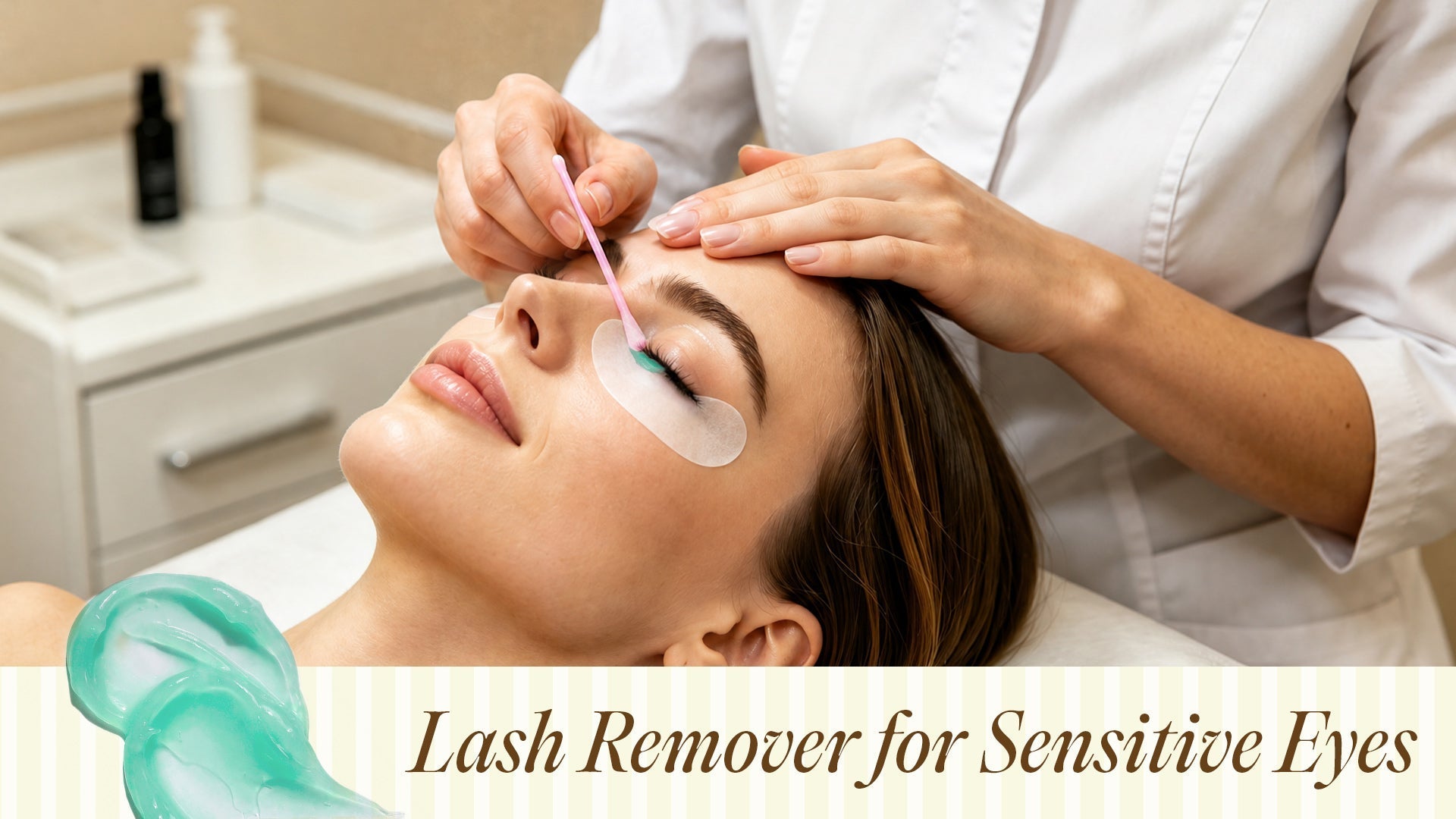
Cream lash remover is the most controlled of the three main textures. It usually stays closer to where it is placed, which makes it popular for full extension removal, sensitive clients, and services where the artist wants time to work without product migrating.
A cream remover makes the most sense when the goal is a calm, complete removal. The artist can apply it to the adhesive area, allow time for softening according to the product instructions, and then slide extensions away without flooding the lash line.
The tradeoff is cleanup. Cream formulas can leave more visible residue if the lash line is not cleaned thoroughly. That is not a flaw; it is part of the service. A cream remover rewards patience from start to finish: careful placement, proper wait time, gentle release, and complete cleansing before the client opens her eyes.
For salon teams, cream remover often belongs in the “full removal” part of the kit. It is not the most glamorous texture, but it is usually the most reassuring one.
Gel Lash Remover: Best for Targeted Work and Artist Flexibility
Gel remover sits between cream and liquid. It spreads more easily than cream but does not move as quickly as a true liquid. This makes it useful for targeted correction, partial removal, and selected extension removal during a service.
A gel texture can feel efficient in experienced hands. It moves through the adhesive area smoothly and can be useful when the artist does not need to cover a large section. For example, a lash artist may prefer gel when removing a few grown-out extensions, correcting a small area, or cleaning up a section before a fill.
The risk is overconfidence. Gel still moves. Too much product can travel toward the eye, especially when the client waters, squeezes the eyes, or shifts during the service. The gel format gives flexibility, but it does not remove the need for controlled placement.
A good way to describe gel remover is “precise when used lightly.” It is not automatically gentler than cream, and it is not automatically safer than liquid. It is a middle texture that depends heavily on technique.
Liquid Lash Remover: Fast, but Least Forgiving
Liquid lash remover can be useful for certain light cleanup jobs, but it is usually the least forgiving format near the eyes. Thin products move quickly. That can be helpful for surface residue, but risky around a lash line where the product needs to stay exactly where it belongs.
Liquid remover may have a place for strip lash glue residue, magnetic liner cleanup, or very specific professional tasks. It is much less ideal as a casual choice for sensitive eyes or full extension removal because the texture gives the user less time and less control.
The American Academy of Ophthalmology notes that glued and magnetic lashes can irritate sensitive skin around the eyes or scratch the cornea when not applied well. That same eye-area caution applies during removal, especially when thin products, adhesive residue, or rubbing are involved.
Liquid remover is not “bad.” It is simply a texture that asks more from the person using it. In beauty editorial terms, it is the least beginner-friendly option.
Gel vs Cream vs Liquid Lash Remover: Practical Comparison
|
Remover Texture |
Best Use Case |
Main Strength |
Main Watch-Out |
|
Cream remover |
Full professional removal, sensitive clients, clean base before fresh set |
Highest placement control |
Needs thorough cleanup |
|
Gel remover |
Spot correction, partial removal, selected fans |
Flexible and efficient in trained hands |
Can migrate when over-applied |
|
Liquid remover |
Light residue cleanup, limited controlled use |
Fast and thin |
Runs easily; less forgiving near eyes |
This table gives a quick comparison, but the real decision depends on the adhesive. Strip lash glue, cluster bond, magnetic liner, and professional extension adhesive do not need the same remover or the same level of caution.
For salon extension adhesive, cream, and gel formats are usually more relevant. For daily strip lash residue, a lighter remover or makeup-removal approach may be enough. For at-home clusters, the product system’s own remover instructions matter more than the texture label alone.
Which Texture Is Better for Sensitive Eyes?
Sensitive eyes usually do better with control. That is why cream remover is often the calmer professional choice. It stays localized, gives the artist more visual control, and reduces the feeling of a product moving unpredictably around the lash line.
Gel remover can also work well for sensitive clients when used sparingly and placed carefully. It is often better for small areas than full saturation. The artist needs to watch for watering, blinking, or facial tension because those tiny movements can change the product’s behavior.
Liquid remover is where sensitive eyes often struggle. Thin formulas can travel, and once a remover migrates, the client may start watering or squeezing the eyes. That creates a feedback loop: more watering, more movement, more discomfort.
Sensitive-eye content should avoid promising that any remover is “sting-free.” A more honest claim is that the right texture, used with the right technique, may reduce the risk of stinging and product migration.
Which Texture Is Better for Full Lash Extension Removal?
Cream remover is usually the strongest choice for full removal because it gives the most control across a larger working area. Full removals require patience. The artist needs enough product contact to soften the adhesive, but not so much movement that the remover spreads beyond the intended zone.
Gel remover can also be used for full removal by skilled artists, but it requires a careful hand. Its smoother spread may make the service feel faster, but faster is not always better when the client’s eyes are closed, and the product is sitting near the lash line.
Liquid remover is generally less suitable for full extension removal because of its movement. Around professional adhesive, removal should feel controlled rather than rushed.
The AAO notes that eyelash extensions can cause issues such as infection, allergic reaction to glue, and trauma around the eyelid or cornea when precautions are not followed. It also notes that allergic reactions to glue may cause pain, itching, redness, and swelling. This is why extension removal should be handled with more care than ordinary makeup removal.
For a salon workflow, link readers to the professional lash remover SOP.
Which Texture Is Better for Spot Correction?
Gel remover often shines in spot correction. It moves more easily than cream, so a trained artist can work through a small area without covering more lashes than necessary.
Spot correction may involve removing a few grown-out extensions, taking off a twisted section, or cleaning up a small area before rebalancing the set. In these cases, the artist does not always need the slower coverage of a cream. A controlled gel can feel more efficient.
Cream still has a place when the client is sensitive or the artist wants extra control. The choice depends on the working area and the client’s comfort level.
Liquid remover may be too mobile for precise correction unless the artist has a very specific, controlled use case. A thin product that spreads beyond the target area can turn spot correction into a bigger cleanup job.
Which Texture Is Better for Lash Clusters?
Lash clusters are different from salon extensions. They may use a bond, sealant, or a temporary adhesive system rather than a professional extension adhesive. That means the right remover depends heavily on the cluster product.
Some cluster systems are removed with a dedicated remover. Others may soften with an oil-based remover or cleansing balm, depending on the instructions. A cream or gel professional extension remover should not automatically be treated as the right answer for every cluster system.
Cluster wearers should focus on the removal behavior, not just the product name. The bond should soften, the clusters should slide away gently, and the natural lashes should not be pulled. When a cluster resists, the answer is more patience, not more force.
For consumer-facing cluster removal, send readers to how to remove lash clusters without damaging natural lashes.
Texture Is Only Half the Story: Adhesive Matters Too
A remover is only one side of the equation. The adhesive being removed matters just as much.
Eyelash adhesives can cause irritation or allergic reactions in some users. A 2022 study in Dermatitis evaluated both professional and consumer eyelash glues for formaldehyde release, noting that lash glues may release formaldehyde even when it is not declared as an ingredient.
Clinical literature has also associated eyelash extension procedures with ocular complications such as allergic blepharitis and keratoconjunctivitis. One PubMed-indexed study concluded that eyelash extension procedures may cause ocular disorders, including keratoconjunctivitis and allergic blepharitis.
This does not mean all lash adhesives or removers are unsafe. It means lash services deserve ingredient awareness, controlled use, and clear aftercare. A gentle-feeling remover cannot fully cancel out an irritating adhesive, poor placement, or aggressive removal.
Cleanup: The Step That Decides Whether Removal Feels Finished
A lash remover service is not finished when the extensions come off. It is finished when the lash line is clean, the residue is gone, and the client can open her eyes comfortably.
Cream formulas may need extra attention during cleanup because the texture is thicker. Gel formulas can leave residue when too much is used or when the release step is rushed. Liquid formulas may seem easier to remove, but they can spread into areas that need more careful wiping.
For a professional, cleanup is part of the result. Residue can affect comfort, lash health, and the performance of a new set. A fresh set placed over residue rarely wears as beautifully as one applied to a clean lash line.
For a consumer, cleanup also matters because leftover adhesive can make the eyes feel sticky or encourage rubbing. Rubbing is one of the easiest ways to turn a small removal issue into lash stress.
When a Professional Should Handle the Removal
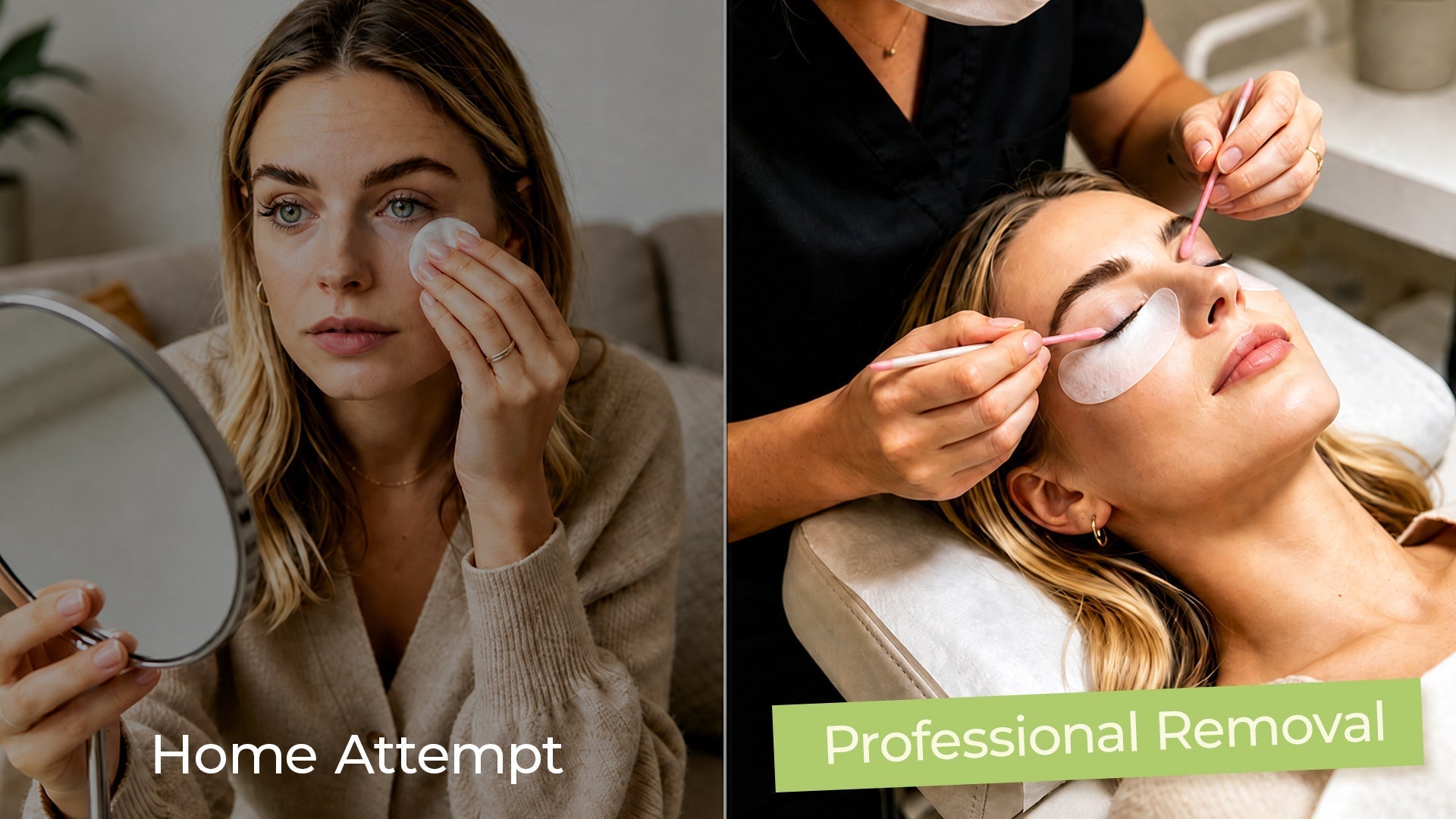
Professional lash extensions should generally be removed by a trained lash artist, especially when the client has sensitive eyes, irritation, grown-out extensions, or adhesive that does not soften easily.
At-home removal becomes risky when the person cannot see the lash base clearly, uses too much remover, works with one eye half open, or pulls when the extension resists. The stronger the adhesive, the more important professional control becomes.
Clinical reports underscore why remover placement matters. A published case report described an eye surface injury after eyelash extension removal solvent was misapplied, showing how serious remover exposure can become when product control fails.
For readers considering DIY extension removal, the next safer article is Can You Remove Eyelash Extensions at Home.
Common Mistakes When Choosing Lash Remover Texture
The first mistake is choosing the fastest remover instead of the most controlled remover. Speed feels attractive, but around the eyes, control usually matters more.
The second mistake is using a professional remover for the wrong lash type. A strip lash glue problem, a cluster bond problem, and a salon extension adhesive problem are not the same job.
The third mistake is assuming “cream” always means gentle or “gel” always means professional. Texture helps, but the formula, instructions, adhesive type, and user skill still matter.
The fourth mistake is treating cleanup as optional. Removing residue can leave the lash line uncomfortable and may interfere with a fresh set.
The fifth mistake is pushing through irritation. Burning, swelling, sharp pain, heavy watering, blurred vision, or worsening redness should stop the service. The FDA advises stopping eye cosmetics that cause irritation and seeking medical care when irritation persists.
FAQ: Gel vs Cream vs Liquid Lash Remover
Is cream or gel lash remover better?
Cream remover is usually better for controlled full removals and sensitive clients. Gel remover is often useful for spot correction and targeted work. The better choice depends on the adhesive, client sensitivity, and artist technique.
Is cream lash remover safer than gel?
Cream remover usually gives more placement control, which can reduce migration. That does not make it automatically safe. Technique, product amount, cleanup, and client comfort still matter.
What is gel lash remover best for?
Gel remover is useful for selected extension removal, small correction areas, and artists who want a balance between control and spreadability. It should still be used carefully around the lash line.
What is liquid lash remover best for?
Liquid remover may be useful for light residue or limited cleanup tasks, but it is less forgiving near the eyes because it can run or spread quickly.
Which lash remover is best for sensitive eyes?
Sensitive eyes usually benefit from controlled textures, careful placement, minimal product, and thorough cleanup. Cream remover is often favored in professional settings because it stays more localized.
Can liquid remover remove eyelash extensions?
Some liquid removers may be marketed for adhesive removal, but their thin texture makes them less forgiving near the eye. Professional extension removal is usually better handled with controlled cream or gel formulas by a trained artist.
Can I use lash extension remover for clusters?
Not automatically. Cluster lashes and salon extensions may use different adhesive systems. Follow the cluster product’s instructions and use a remover appropriate for that system.
Should I remove lash extensions at home?
Salon extensions are best removed professionally. At-home removal can involve poor visibility, product migration, tugging, or natural lash stress. Read, can you remove eyelash extensions at home before attempting anything?
Final Takeaway
Gel, cream, and liquid lash removers all have a place, but they are not interchangeable.
Cream remover is the controlled choice. It is often best for full professional removals, sensitive clients, and clean base prep before a fresh set. Gel remover is the flexible choice, useful for spot correction and targeted work in trained hands. Liquid remover is the fastest but least forgiving option, better suited to light residue cleanup than broad work close to the eye.
The smartest choice starts with the adhesive, not the texture name. Strip lash glue, cluster bond, magnetic liner, and professional extension adhesive all need different handling. Around the eyes, the best remover is not the one that works fastest. It is the one that works cleanly, stays controlled, and lets the lashes release without force.
Ready to support a cleaner lash removal routine?
Shop Lashview on Amazon