
Lash remover sounds like a simple product until you actually need it. Maybe your lash clusters are hanging on longer than expected. Maybe your strip lash glue left sticky residue. Maybe a client comes in with grown-out extensions and wants a clean removal before a fresh set. Or maybe your eyes feel sensitive, and you are trying to avoid pulling out natural lashes.
The problem is that “lash remover” can mean several different things. A remover for strip lash adhesive is not the same as a professional eyelash extension remover. A gentle oil-based makeup remover is not the same as a cream remover used in salon extension removal. And a product that works for cluster bond may not be appropriate for professional lash extension adhesive.
This guide breaks down the major types of lash removers, what each one is used for, how textures like gel and cream compare, what sensitive-eye users should watch for, and when it is smarter to book a professional instead of trying to remove lashes at home.
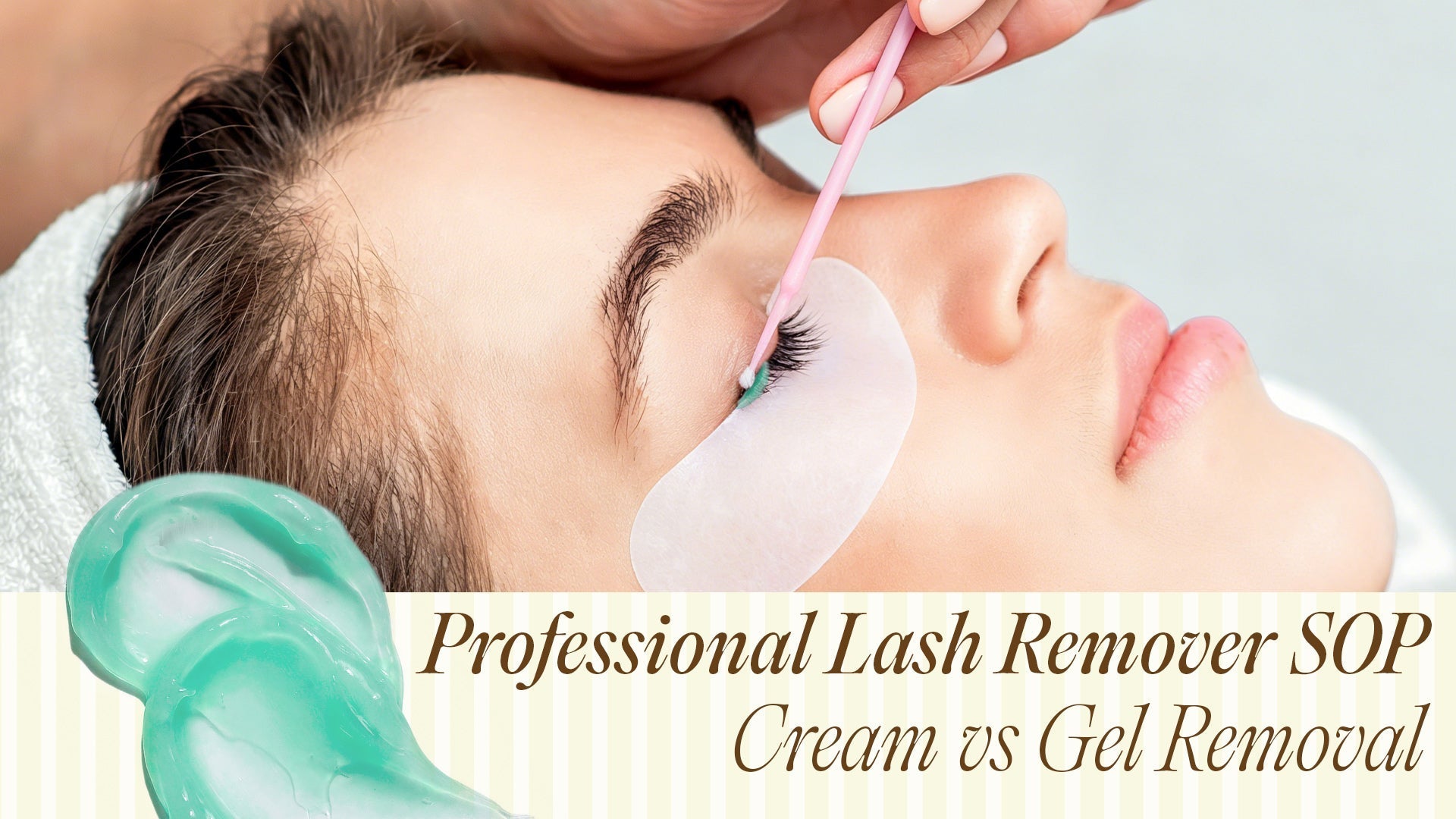
If you are a lash artist looking for a more operational salon process, save our detailed professional lash remover SOP for your next read.
Looking for lash care and eye beauty essentials?
Shop Lashview on Amazon
First: What Are You Actually Removing?
Before choosing a lash remover, you need to know what kind of adhesive you are dealing with.
This is the mistake many beginners make: they search “eyelash glue remover” and assume one product can remove every type of lash. In reality, different lash formats use different bonding systems.
|
Lash Situation |
What You Are Removing |
Typical Removal Need |
|
Strip lashes |
Daily lash glue on the lash band and skin |
Gentle makeup remover or lash adhesive remover |
|
Lash clusters |
Cluster bond or sealant attached near natural lashes |
Bond-softening remover, oil-based remover, or brand-specific remover |
|
Self-adhesive lashes |
Pre-applied adhesive strip or tacky base |
Gentle peel-off and residue cleanup |
|
Magnetic lashes |
Magnetic liner or magnetic lash system |
Makeup remover for liner residue |
|
Salon lash extensions |
Professional extension adhesive attached to natural lashes |
Professional cream or gel remover, ideally handled by a lash tech |
The FDA classifies false eyelashes, eyelash extensions, and their adhesives as cosmetic products, and it specifically reminds consumers that eyelids are delicate and allergic reactions or irritation around the eye can be especially troublesome.
That is why lash removal is not just about getting the product off. It is about removing it without rubbing, pulling, burning, or weakening natural lashes.
Lash Remover Types: Cream, Gel, Liquid, and Oil-Based
Most lash removers fall into four practical categories: cream, gel, liquid, and oil-based removers. None of them is automatically “best.” The right one depends on the adhesive type, user skill level, eye sensitivity, and whether the removal is happening at home or in a salon.
|
Remover Type |
Texture |
Best For |
Main Advantage |
Main Watch-Out |
|
Cream remover |
Thick, controlled texture |
Professional full extension removal |
Less runny, easier to localize |
Must be cleaned thoroughly |
|
Gel remover |
Smooth, semi-thick texture |
Spot removal, controlled pro use |
Faster spread than cream |
Can still migrate if overused |
|
Liquid remover |
Thin, watery texture |
Light residue, some strip glue cleanup |
Quick for surface cleanup |
Higher risk of running into the eyes |
|
Oil-based remover |
Oil or balm texture |
Some strip glue and cluster bond residue |
Gentle softening for daily beauty use |
Not suitable for every adhesive or extension situation |
If your main question is texture choice, the deeper comparison is gel vs cream vs liquid lash remover. That article should be used as the buying-decision page for lash artists and serious DIY users.
Cream Lash Remover: Best for Controlled Professional Removal
Cream lash remover is popular in professional settings because it usually stays where it is placed better than a thin liquid. That matters when you are working close to the eyelid and trying to dissolve adhesive without letting the product run into the eye.
When cream remover makes sense
Cream remover is often used for:
-
Full eyelash extension removal
-
Clients who need a clean base before a fresh set
-
Removing grown-out or twisted extensions
-
Situations where control matters more than speed
-
Lash artists who want less product migration
What to watch for
Cream remover still needs proper isolation, careful placement, and thorough cleanup. Thick does not mean risk-free. If too much product is used or if the client opens their eyes during removal, irritation can still happen.
For a step-by-step salon workflow, link this section to the professional lash remover SOP.
Gel Lash Remover: Useful for Speed and Spot Correction
Gel remover sits between cream and liquid. It is usually easier to spread than cream, but not as watery as a liquid remover. Some lash artists like gel for targeted work, especially when they need to remove a few extensions or correct a set.
When gel remover makes sense
Gel remover may be useful for:
-
Spot removal
-
Small correction areas
-
Removing selected extensions before a fill
-
Lash artists who want a balance of control and speed
What to watch for
Gel can still move if too much is applied. It should not be placed directly into the eye or too close to the waterline. Like cream remover, it requires controlled timing and cleanup.
If a client reports burning, watering, or stinging, do not “wait it out.” Stop the process, remove the product carefully, and reassess.
Liquid Lash Remover: Fast, but Less Forgiving
Liquid lash remover can be useful for certain light cleanup situations, but it is often less forgiving around the eyes because thin products move quickly.
When liquid remover may be used
Liquid remover may be used for:
-
Light strip glue residue
-
Surface cleanup
-
Makeup residue around the magnetic liner or lash glue
-
Certain professional tasks where the artist has strong control
Why beginners should be careful
A watery remover can run into the eye more easily than a cream. That is one reason many lash professionals prefer thicker textures for extension adhesive removal.
The American Academy of Ophthalmology notes that both magnetic and glued lashes can irritate the sensitive skin around the eyes or scratch the cornea if not applied well; removal products should be treated with the same eye-area caution.
Oil-Based Removers: Gentle for Some Lash Glue, Not a Universal Fix
Oil-based removers, cleansing balms, or makeup removers can help soften some daily lash glues and cluster bonds. They are commonly used by consumers because they are familiar and feel less harsh than professional solvent-style removers.
When an oil-based remover may help
Oil-based remover may be helpful for:
-
Strip lash glue residue
-
Some cluster bond residue
-
Removing makeup around the lash line
-
Softening leftover tackiness after false lash removal
When oil-based remover is not enough
Oil is not a magic solution for every adhesive. Professional eyelash extension adhesive is usually stronger than daily lash glue or cluster bond. Trying to dissolve salon extensions at home with random oils can lead to rubbing, tugging, and lash loss.
If the reader is specifically asking about salon extensions, direct them to " Can you remove eyelash extensions at home rather than presenting oil as a universal solution.
Lash Cluster Removal vs Professional Extension Removal
This is one of the most important distinctions in the whole article.
Lash clusters and salon extensions may look similar from a distance, but they are not removed the same way.
Lash clusters
Lash clusters are usually applied in small sections with cluster bond, sealant, or temporary lash adhesive. Depending on the product, they may be designed for one-day, weekend, or multi-day wear.
Removal usually focuses on softening the bond, waiting long enough, sliding the clusters off gently, and cleaning leftover residue without tugging.
If your reader is wearing at-home clusters, the more specific next step is how to remove lash clusters without damaging natural lashes.
Salon lash extensions
Salon extensions are attached to individual natural lashes using professional adhesive. They should not be pulled off. The safest removal route is usually a trained lash professional using an appropriate remover and controlled technique.
A published case report described serious eye surface injury after eyelash extension removal solvent was misapplied, showing why remover placement and product control matter around the eyes.
Ingredients and Safety: What to Pay Attention To
Most consumers do not need to become cosmetic chemists, but they should understand that lash adhesives and removers sit very close to the eyes.
Check the product’s intended use.
Before using any remover, check whether it is meant for:
-
Strip lash glue
-
Cluster bond
-
Magnetic liner cleanup
-
Professional eyelash extension adhesive
-
General eye makeup removal
Do not assume a nail glue remover, household adhesive remover, or random solvent can be used near the eyes. That should be an obvious no, but it still needs to be said clearly.
Check the ingredient list and warnings.
The FDA recommends checking ingredient labels for eye cosmetics, especially if you want to avoid certain ingredients or compare brands. It also advises stopping use if an eye cosmetic causes irritation.
Understand adhesive sensitivity
Some eyelash adhesives may contain or release irritating compounds. A 2022 study in Dermatitis evaluated both professional and consumer eyelash glues for formaldehyde release, which is one reason adhesive and remover conversations should include ingredient awareness rather than only wear-time claims.
Do not ignore eye symptoms.
Redness, burning, swelling, watery eyes, blurred vision, or sharp pain should not be treated as normal. If symptoms continue after removing the product, the safer advice is to seek medical guidance.
Lash Remover for Sensitive Eyes
Sensitive-eye users are usually not worried about one single thing. They are worried about a chain reaction: remover runs into the eye, the eye burns, they rub harder, lashes loosen unevenly, and the whole process becomes more irritating.
That is why sensitive-eye removal needs to focus on both formula and technique.
Sensitive-eye users should look for:
-
Better product control
-
Minimal running
-
Gentle cleanup
-
Clear instructions
-
No harsh rubbing
-
No pulling
-
Patch testing when appropriate
-
A professional option for extension removal
For sensitive-eye readers, the more focused follow-up article is lash remover for sensitive eyes.
Sensitive-eye users should avoid:
-
Using too much product
-
Working too close to the waterline
-
Pulling lashes off before the adhesive softens
-
Mixing multiple removers at once
-
Using products not intended for eye-area use
-
Trying to remove painful salon extensions alone
Studies and clinical reports have associated eyelash extension procedures with ocular issues such as keratoconjunctivitis and allergic blepharitis, so sensitive-eye content should stay cautious and avoid overpromising.
A Safer Removal Mindset: Soften, Wait, Slide, Clean
Whether you are removing cluster lashes or cleaning strip lash glue, the general mindset is the same: do not rip.
Step 1: Soften the bond
Use a remover appropriate for the lash type. Apply it according to the product instructions. For professional extension adhesive, this step should usually be done by a trained lash artist.
Step 2: Wait long enough
Many removal problems happen because the user gets impatient. If the bond has not softened, pulling will transfer force to the natural lashes.
Step 3: Slide, do not yank
Lashes should loosen and slide away more easily once the adhesive has softened. If they do not move, stop and continue softening rather than pulling.
Step 4: Clean residue gently
Leftover residue can affect comfort and future lash application. Clean it carefully without scrubbing the lash line.
Step 5: Let the eye area rest
If the skin or eyes feel irritated, avoid immediately reapplying new lashes. Give the area time to calm down.
When to Stop Immediately
Stop using lash remover immediately if you notice:
-
Burning that does not settle quickly.
-
Sharp eye pain
-
Swelling
-
Blurred vision
-
Heavy watering
-
Redness that worsens
-
A gritty feeling in the eye
-
Skin blistering or rash
-
Natural lashes are coming out in clumps.
Do not continue just because “the lashes are almost off.” Eye safety comes first.
When to Book a Lash Professional
Book a lash professional if:
-
You are removing salon eyelash extensions.
-
The adhesive feels hard or does not soften.
-
Your extensions are twisted, grown out, or pulling.
-
You feel pain when trying to remove lashes.
-
You cannot tell whether you are wearing clusters or extensions.
-
You have sensitive eyes and are worried about removing contact.
-
You need a clean base before a fresh set.
Professional removal is not just about having a stronger product. It is about isolation, controlled placement, timing, cleanup, and knowing when to stop.
When to See a Doctor
Seek medical care if you experience:
-
Persistent eye pain
-
Vision changes
-
Chemical exposure in the eye
-
Significant swelling
-
Signs of infection
-
Severe allergic reaction
-
Redness or irritation that does not improve
The eye area is not the place to troubleshoot for days. If symptoms feel abnormal or severe, get professional medical advice.
Common Lash Remover Mistakes
Mistake 1: Using the wrong remover for the adhesive
A strip lash glue remover may not remove salon extension adhesive. A general oil cleanser may soften some residue, but may not safely remove professional extensions.
Mistake 2: Pulling before the bond is ready
If the lash does not slide off easily, the adhesive is not softened enough. Pulling can remove natural lashes.
Mistake 3: Using too much product
More remover does not always mean faster removal. Too much product can increase the chance of migration into the eye.
Mistake 4: Applying remover too close to the waterline
Keep remover where it is needed. Avoid placing product directly into the eye or on the waterline.
Mistake 5: Reapplying lashes immediately after irritation
If the eye area is red, swollen, itchy, or tender, pause before applying new lashes.
Mistake 6: Treating salon extensions like clusters
Salon extensions and at-home clusters are not the same. If you are unsure, assume professional removal is safer.
FAQ: Lash Remover
What is lash remover?
Lash remover is a product used to soften or break down lash adhesive so false lashes, lash clusters, or eyelash extensions can be removed with less pulling and less natural lash stress.
Is eyelash glue remover the same as eyelash extension remover?
Not always. Eyelash glue remover may refer to products for strip lash glue or light residue. Eyelash extension remover usually refers to stronger professional products designed for salon extension adhesives.
What is better: gel or cream lash remover?
Cream remover usually offers more control for full professional removal. Gel remover can be useful for smaller areas or faster targeted work. The better choice depends on the task, user skill level, and sensitivity. For a full comparison, read gel vs cream vs liquid lash remover.
Can I remove eyelash extensions at home?
It is usually safer to have salon extensions removed by a lash professional. At-home pulling, oil experiments, or improper remover use can irritate the eyes or damage natural lashes. Read, can you remove eyelash extensions at home for a risk-focused breakdown?
What lash remover is best for sensitive eyes?
Sensitive-eye users often benefit from controlled textures, careful placement, and minimal rubbing. However, “gentle” does not mean risk-free. The right product depends on what adhesive you are removing. See lash remover for sensitive eyes for a more detailed guide.
Can oil remove lash glue?
Oil can help soften some strip lash glue or cluster bond residue, but it is not a universal remover. It should not be treated as a reliable method for professional eyelash extension adhesive.
What should I do if lash remover gets in my eye?
Stop the removal process. Follow the product’s safety instructions, flush if directed, and seek medical advice if pain, redness, blurred vision, or irritation continues.
Why are my natural lashes falling out after removal?
Some natural shedding is normal, but noticeable lash loss may come from pulling, overuse of adhesive, improper removal, irritation, or wearing lashes longer than recommended. If lash loss is significant or the eyelid is irritated, pause lash use and seek professional guidance.
Final Takeaway
The safest lash removal starts with one question: what adhesive are you actually trying to remove?
Strip lash glue, cluster bond, magnetic liner, and professional extension adhesive do not require the same remover or the same technique. Cream and gel removers are often preferred in professional settings because they offer more control. Liquid and oil-based removers may be useful for lighter residue, but they are not universal solutions.
If you are removing at-home clusters, soften the bond, wait, slide gently, and clean residue without rubbing. If you are removing salon extensions, dealing with pain, or working with sensitive eyes, the smarter option is usually to book a trained professional.
Ready to support your lash routine with beauty essentials?
Shop Lashview on Amazon